Thursday, January 31, 2019

Singer Sewing Festival

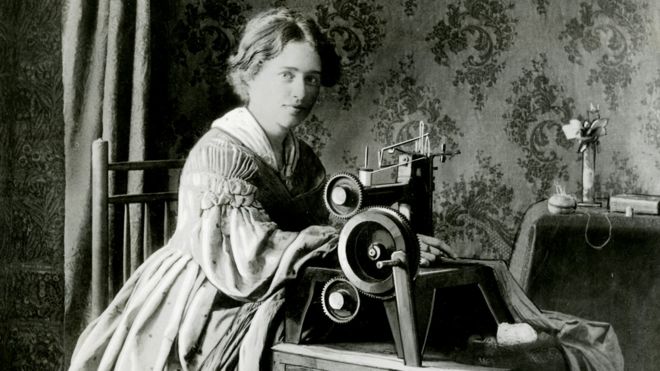
In 1950 Isaac Merritt Singer was working in Virginia, USA as a machinist for O C Phelps, the manufacturer of the Blodgett & Leriw sewing machine.  This was an early sewing machine that was not particularly successful.

Singer felt he could improve the machine and by September 1850 succeeded in producing the world's first ever practical sewing machine.  The machine was granted its American patent in August 1851 and I. M. Singer & Company began to manufacture their machines in a small workshop in Boston, MA, USA.  This was a labour and time intensive process and the company found it difficult to meet demand.  They had to expand and opened additional factories in and around Boston between 1858 and 1872.

During this period, Singer's industrial sewing machine market boomed with the need to equip American soldiers for the Civil War with uniforms. With new inventions in weaving looms and new manufacturing processes making cloth cheaper and more abundant, there was a gap in the market for a machine that could increase the manufacturing speed of clothing.


An opening was materialising also for the domestic sewer to use their skills and with the new, more easily available and cheaper material, could enhance their income by engaging in dressmaking and allied businesses and resulted in the start of the domestic sewing machine market.

The demand from outside America composed 40% of the company's overall business and Singer tasked Scot George Ross McKenzie (Company President) to look for a base in Great Britain which would act as "an export platform to supply the world market with sewing machines".


In October 1867 Singer's first overseas factory,can small assembly plant, was opened at 1 Love Loan, High John Street, Glasgow.  It assembled machines using component parts shipped from Singer factories in America.  Glasgow was selected because of its international reputation for shipbuilding, and shipping connections, cotton thread manufacture and iron smelting, global trade links and skilled, but low paid work force.

Demand continued to outstrip production and Singer rented a new factory in James Street, Bridgeton in 1869, where machines were made in their entirety and this led to an increased production from 30 machines per week to 3000.  Expansion continued and by 1881 it was manufacturing nearly 5000 machines per week and employing 2000 staff.

The Glasgow Evening News reported in 1877 a waiting list for Singer sewing machines of 40,000.  Clearly, further expansion was required.

Singer purchased over 46 acres of farm land at Kilbowie (now known as Clydebank) for around $65,000 in 1881.  This new manufacturing plant would reduce existing production costs by 30%™and increase production capability.

There appeared to be no end to the ever increasing demand for sewing machines, especially Singers, the leading brand.  As demand continued to grow, so did the factory which was expanded over the next 30 years.

The Clydebank factory was a key player in the sewing machine industry on a global scale.  At its production peak in 1913 the factory had grown to occupy a site if over 100 acres, more than double the initial area of land purchased in 1881 and in 1913, shipped over 1.3 million (1,301,851) sewing machines from its factory doors around the world with help from its 14,000 employees. Of these 14,000 employees a significant number were women.

The Needlewomen

Singer employed over 75% of the available female workforce in Clydebank. This was very unusual for the Victorian era, when working men outnumbered women in the burgh by 6:1

The female workforce was also limited to unmarried girls.  Once married women were expected to stay at home and look after the children.

Singer therefore played a very important role in the female job market in Clydebank, providing jobs for many of those females resident.  The 1911 census shows that 43% if women aged 19 or under and 84% of women aged 24 or under were employed in the engineering and metal working sectors. In 1911 1159 women in total were employed at Singer from Clydebank, Glasgow and surrounding areas.

Working outside the home brought more than just financial benefits for girls - they could get out into the world, achieving the status and attached independence of a wage earner and they had the company if their own age during the day.

A very rigid sexual division of labour existed within the Singer plant with women being almost entirely excluded from the more highly paid, skilled and more interesting work tasks.  This, despite being highly valued for their superior manual dexterity when carrying out fine work.

It has been suggested that factories like Singer, bred young women who tended to be more self confident than their sisters in domestic service.  These girls mostly in their late teens/early 20s were more likely to speak out if they perceived an injustice.  This was to be a significant driver in the trouble brewing at Singer during 1910 and 1911.

Early in 1920 a complaint was brought before the local munitions tribunal for the Western Division of Scotland by the Workers Union (of which the pursuer was a member) against the Singer company, to the effect that a 5/- a week award was not being paid to the female workers in the factory at Christmas.

The complaint was proved.  The company appealed and won.  This scenario played out over a number of years and although the female employee was awarded reparations in 1922, by 1923 the company was acquitted of any breach of law.

This shows the extent to which women were forced to battle for equal pay.  Despite these pay battles, Singer continued to employ a large number of women, 3,500 on average throughput the 1930s - just under half the total workforce.

Ahead Of The Game

Over the last few issues since summer 2018 Westender magazine has been showing the new trends just as soon as they start coming into the stores in Glasgow city centre.

It's really good to be ahead of the game and show the trends as they emerge, and seeing the new pieces in the shops  always gives me the nostalgia of getting excited about fashion for the first time.  We did the March April fashion shoot last week in a gorgeous building in the city centre and the trend we went for was suits - and already there are lots of really nice ones available in major shops.  One I didn't get to use was a gorgeous snake print one from TopShop's Love concession, go take a look at it for yourself.  Next have a gorgeous yellow one I'd love to have for myself, and I did keep the green floral one from ASOS, I'm looking for the right opportunity to wear it as soon as possible and there might be that chance sometime soon.  Colour combinations are easy to make up shopping in different stores, a blouse from Next went really well with a suit from TopShop, and a shirt from Cos in Princes Square went particularly well with the floral suit.  I had a black and white stripe ASOS suit, and put a bralette from a new designer, Bonnie Lawson-Brown who lent me the prototype more or less straight out of the seamstress' hands!  This was one of  my favourite shoots for the styling I pulled and the location we shot, so I can't wait to see the issue in print at the end of February.

Westender fashion was shooting the trends ahead of schedule last summer with the animal print trend, so that when the magazine came out and gave the readers some inspiration there would be lots of choice in the shops in the west end, city centre and online.


I'm hearing really nice compliments about the styling from various people like collaborators in the Scottish creative industry and from the managers and staff in the shops I borrow pieces from which is great!  So, I'm looking forward to keeping going and bringing the trends to the magazine pages as soon as they start to happen, and let the trends unfold as the season progresses.  It's exciting!

Wednesday, May 30, 2018

Westender anniversaries all round!

As Westender magazine hits it's 10 year anniversary, this month marks a year I've been working on the mag, and it's all the issues I've worked on which can be read online.


I change my mind from time to time on which is my favourite shoot, my best ones are on my website.  All have been great to work on, I love working with the Westender team, always so organised, professional, friendly and easy going.  We all know our stuff and gel well.  All the models we've had have been fantastic, from braving the weather to not-quite-managing steps in heels.


There's something about the first one I always love, very classic.  We had two of my rabbits on set for the Spring 2018 one, such well behaved bunnies who were happy to pose - it's in the genes, their sister has been photographed for a Vogue China editorial three years ago.  I love the metallic trend, and was really pleased to get the chance to do a metallic themed shoot last Autumn.

I've loved developing relationships with the boutiques in the West End, and bigger stores in Glasgow, it's good to catch up with the people I'm getting to know every couple of months.

Here's to working with a brilliant team on a splendid magazine for plenty more years.


Saturday, May 19, 2018

Thursday, May 17, 2018

New Lanark textile exhibition


ARTIST TEXTILES Picasso to Warhol was open at New Lanark from 26th January - 29th April 2018. 

British commitment to artist textiles was remarkably successful into the 1950s. Despite political crisis and economic depression from the First World War onwards, textile manufacturers were not deterred.


Allan Walton Textiles and Edinburgh Weavers commissioned iconic artists of this period to produce work in textiles.  Through Edinburgh Weavers, artists such as Ben Nicholson were able to realise their graphic, dynamic works in both weave and print.


Brave New World

Hardship, political crisis and economic struggle dominated the early half of the twentieth century.  The textile trade became an important part of the national economic recovery after the Second World War,   Iconic artists' designs were central to manufacturers' success.  This work was rich, diverse and inventive and was received enthusiastically by the public.

Textile company Ascher  Ltd commissioned major artists, such as Henry Moore and Henri Matisse, to design a series of head squares and fashion yardage for the recovering couture industry.  Artist Graham Sutherland designed textiles for Horrockses Fashions as well as wallpapers and illustrations for books.  Cresta Silks produced block-printed fashion silks by artist Patrick Heron.  'Aztec' seen here is considered to be one of the most accomplished pattern designs of the following decade.


Fit For a Queen 1940s - 1950s - Horrockses Fashion

Dresses by Horrockes Fashion came to epitomise the traditional English summer frock.  Although popular and affordable, Horrockses dresses were often worn by celebrities.  At their peak, the company designed a collection of dresses for the Queen's coronation tour of the Empire and Commonwealth in 1953-1954.  The Queen's sister Princess Margaret often wore Horrockses dresses, as did Margot Fonteyn.

In 1946 the long established cotton goods manufacturer, Horrockses, Crewdson and Company Ltd, set up a fashion subsidiary, Horrockes Ltd mainly for the production of printed cotton dresses.  They engages painters Alastair Morton and Graham Sutherland to supply textile designs for the company.


John Rombola's Circus (below) is a screen printed cotton furnishing textile by Patterson Fabrics Inc,, New York, 1956.  This is the first textile design by this New York artist and illustrator for Patterson Fabrics.  Rombola's designs were also available as wallpapers through Patterson's sister companies, Harben Papers and Piazza Prints.


This Is Tomorrow 1954-1960s Hammet Prints Ltd

Hammer Prints Ltd was established by avant-garde artists and designers to encompass all aspects of interior design.  They would create everything from furniture, to ceramics, wallpaper and of course, textiles.  This group produced radical and ground-breaking work based on new ideas and techniques. They showed examples of this work in the exhibition, This Is Tomorrow, in 1956.

The group was established by sculptor Eduardo Paolozzi and photographer Nigel Henderson.  Paolozzi and Henderson created designs from an assortment of  photographic material and images from popular culture and ethnographic sources.  The resulting patterns were then silk screened onto textiles, creating  some of the most influential designs of this period in Britain.

Modern Masters  America 1950s - Picasso and Fuller Fabrics


Modern Masters was a collaboration between Fuller Fabrics and some of the most internationally renowned artists of the 20th Century. They aimed to sell "art by the yard" to the American masses. Central to the projects success was the affinity between Pablo Picasso and Dan Fuller, owner of Fuller Fabrics.

Picasso had never before agreed to design commercial textiles.  It was certainly due to his involvement that Fuller was able to engage other important artists such as Joan Miro, Fernand Leger and Marc Chagall.  Fuller's intention was to produce fashion yardage on a vast scale, which the company planned to sell in the lower price range of $1.50 to $2 a yard.

Pioneers Of Pop 1950s to 1960s Andy Warhol and Zandra Rhodes

Andy Warhol, the epitome of Pop Art, worked in New York as an extremely successful graphic designer.  His textile designs are only now coming to light.  The collection here includes a group of food related 'Pop' textiles for his friend Stephen Bruce, proprietor of the legendary New York restaurant, Serendipity 3.


Zandra Rhodes is a hugely successful fashion designer whose works have been considered outrageous by traditional British manufacturers.  Her textiles draw on eclectic sources from commercial advertising to Australian indigenous art.  Despite her commercial experience and skill, she found it almost impossible to sell her extreme pop textiles to the mainstream fashion industry.  This inspired her to develop her work in a dazzling fusion of fashion and textile design.  Rhodes is the founder of the Fashion and Textile Museum with whom this exhibition was developed.


Above, left:  Gerald Wilde Screen printed silk fashion textile, John Mearchant & Co, London 1944

This textile design was originally shown at a 1944 Cotton Board exhibition and subsequently displayed at the Victoria and Albert Museum's exhibition "Britain Can Make".

Above, right: Pablo Picasso "Carnet II"  Screen printed cotton furnishing textile, Bloomcraft Fabrics Inc,, New York 1963

Derived from a series of drawings and paintings Picasso  made of his "muse" and second wife Jacqueline Roque.


Tuesday, April 17, 2018

Cyber Sages

I'm working on shoots developing characters to inspire and retaliate against consumer society.

Cyber Sages are futuristic druids; ethereal, compassionate beings connected to nature - organic and ecological. They are spiritual, serene, intelligent, and self-sufficient. These are characteristics which have filtered down from their Elven ancestry as well as the Celtic warrior spirit of strength, determination and motivation which has also been inherited from that ancient race.


In a period where we need more profound influences than mass advertising campaigns to tell us we need products to boost our ego instead of developing self belief, I want to show these inspirational and responsive images, and put them in the context to tell a story or make a point.

The series of images below is the story of a natural being transformed into a cyborg who's aim is to live for the riches.  In the final two images we see her regaining control of her identity and turning back into a self defining individual.


The styling represents the futuristic and the natural aspects of the characters - lots of metallics as well as natural elements like feathers, and I like to include an elegant and ethereal look to show the high status and the spiritual elements too.  The story below is a beautiful warrior queen, before and after going through the wars, returning with the battles scars.


The whole concept is also making me think about what fabrics might be like in the future - metallics are very space age, but have been since the 1960s.  I'll have to make a point of keeping up to date with trend forecasting etc to see what's coming up, and how this will affect clothing in the future.  I'm into using ethical materials and making things last too, so will try and incorporate these into looks as well as the drama of glamorous looking styling.

Here are a couple of the songs from the soundtrack that runs in my mind:
The Shamen "Hyperreal"
Hyperreal Feeling Flowing Don't give in you got to keep going Move it up right to the very top tip And when you get there You won't want to quit climbing Ascending Rising Harmonising Fantasising Healing Feeling Hyperreal only way to go Lets do it ...

Led Zeppelin "The Battle Of Evermore"
The Queen of Light took her bow,
And then she turned to go,
The Prince of Peace embraced the gloom,
And walked the night alone.


Oh, dance in the dark of night,
Sing to the morning light.
The dark Lord rides in force tonight,
And time will tell us all.


Oh, throw down your plough and hoe,
Rest not to lock your homes.
Side by side we wait the might
Of the darkest of them all.


I hear the horses' thunder down in the valley below,
I'm waiting for the angels of Avalon, waiting for the eastern glow.


The apples of the valley hold the seeds of happiness,
The ground is rich from tender care,
Repay, do not forget, no, no.


Dance in the dark of night,
Sing to the morning light.
The apples turn to brown and black,
The tyrant's face is red.


Oh war is the common cry,
Pick up your swords and fly.
The sky is filled with good and bad
That mortals never know.


Oh, well, the night is long, the beads of time pass slow,
Tired eyes on the sunrise, waiting for the eastern glow.


The pain of war cannot exceed the woe of aftermath,
The drums will shake the castle wall,
The ring wraiths ride in black, ride on.


Sing as you raise your bow,
Shoot straighter than before.
No comfort has the fire at night
That lights the face so cold.


Oh dance in the dark of night,
Sing to the morning light.
The magic runes are writ in gold to bring the balance back.
Bring it back.


At last the sun is shining,
The clouds of blue roll by,
With flames from the dragon of darkness,
The sunlight blinds his eyes.


Led Zeppelin "Kashmir"
Oh let the sun beat down upon my face
With stars to fill my dream
I am a traveler of both time and space
To be where I have been


Sit with elders of the gentle race
This world has seldom seen
Talk of days for which they sit and wait
And all will be revealed

Talk and song from tongues of lilting grace
Sounds caress my ear
But not a word I heard could I relate
The story was quite clear

Oh, baby, I been flying
No, yeah, mama, there ain't no denyin'
Ooh, yeah I've been flying
Mama, mama, ain't no denyin', no denyin'

All I see turns to brown
As the sun burns the ground
And my eyes fill with sand
As I scan this wasted land
Trying to find, trying to find where I've been.

Pilot of the storm who leaves no trace
Like thoughts inside a dream
Heed the path that led me to that place
Yellow desert stream

My Shangri-La beneath the summer moon
I will return again
Sure as the dust that floats high in June
When movin' through Kashmir.

Oh, father of the four winds, fill my sails
Across the sea of years
With no provision but an open face
Along the straits of fear

When I'm on, when I'm on my way
When I see, when I see the way, you stay

When I'm down
When I'm down, so down
Ooh, my baby, ooh, my baby, let me take you there
Come on, come on
Let me take you there, let me take you there.

Sunday, October 1, 2017

Fantasy costume pieces

I've been having fun recently making fantasy costume pieces with feather trim.  These were originally inspired by my warrior queen styling research and have grown from there.  I'm nearly finished a turquoise cape and I've started making a dress - this rookie dressmaker is doing not bad for a beginner!  I've mastered threading the sewing machine and now there's no stopping me.  When I was in London the other week I had a look round Shepherd's Bush market and saw so many fantastic fabrics which have given me lots of ideas for making clothes from jackets to cocktail dresses.  Where will this end....


The accidental Singer sewing machine revolution By Tim Harford

By Tim Harford ( taken from  bbc.co.uk/news/business ) Gillette adverts  stand against toxic masculinity . Budweiser  makes speciall...